Table of contents
Jump to
- 1Quick Table
- 2What Is Kundan Jewellery?
- 3What Is Kundan Jewellery Made Of?
- 4Why Kundan Jewellery Has Remained Popular for Centuries
- 5How Is Kundan Jewellery Made?
- 6Kundan vs Polki vs Jadau Jewellery
- 7Why Kundan Jewellery Is a Bridal Favourite
- 8Popular Types of Kundan Jewellery
- 9How to Identify Authentic Kundan Jewellery
- 10Explore Kundan Jewellery at Goutham Jewellers
If you've ever wondered what Kundan jewellery actually is, why it is often mentioned alongside Polki jewellery and Jadau jewellery, or what makes one Kundan piece more valuable than another, this guide will answer those questions. We'll explore the materials used in Kundan jewellery, how authentic pieces are crafted, how to identify quality workmanship and why Kundan continues to be one of the most popular jewellery styles for Indian weddings.
Quick Table

What Is Kundan Jewellery?
Kundan jewellery is defined by the way gemstones are set rather than the gemstones themselves. The technique uses highly refined gold foil to secure stones within an intricate framework, creating jewellery known for its detailed appearance and handcrafted finish.
Unlike modern jewellery settings that rely on visible prongs or machine-made precision, Kundan craftsmanship focuses on creating a seamless look where the stones appear naturally integrated into the design. This distinctive approach is what gives Kundan jewellery its signature elegance and enduring appeal.
Today, Kundan jewellery is worn across India for weddings, festive celebrations and special occasions, often serving as a bridge between heritage craftsmanship and contemporary style.
What Is Kundan Jewellery Made Of?
Authentic Kundan jewellery combines several materials, each playing an important role in the final design.
Refined Gold
Highly refined gold foil is used to secure gemstones within the jewellery. This technique is what gives Kundan its name and contributes to its luxurious finish.
Lac
Lac is a natural resin used inside the jewellery structure. It provides support and stability while allowing artisans to create intricate patterns and detailed settings.
Gemstones
Kundan jewellery often features rubies, emeralds, sapphires and other coloured gemstones. Some designs may also incorporate Polki diamonds, depending on the style and craftsmanship involved.
Meenakari Work
Traditional Kundan jewellery frequently includes colourful meenakari enamel work on the reverse side. This decorative element showcases the artistry of the craftsman and adds beauty from every angle.

Why Kundan Jewellery Has Remained Popular for Centuries
Long before modern jewellery manufacturing existed, artisans in Rajasthan developed a gemstone-setting technique that would eventually become one of India's most admired jewellery traditions.
The craft flourished during the Mughal era, when royal families commissioned elaborate jewellery for ceremonies, celebrations and courtly occasions. These pieces showcased exceptional craftsmanship, vibrant gemstones and intricate detailing.
What makes Kundan remarkable is its ability to evolve without losing its identity. While traditional bridal sets remain highly sought after, contemporary interpretations have introduced lighter designs that appeal to modern buyers while preserving the essence of the craft.
How Is Kundan Jewellery Made?
Creating authentic Kundan jewellery is a labour-intensive process that requires patience, precision and years of specialised training.
Gadhayi – Creating the Framework
The jewellery framework is carefully constructed according to the intended design.
Khudayi – Detailed Engraving
Decorative patterns and motifs are engraved onto the framework to add depth and visual character.
Meenakari – Adding Colour
Colourful enamel work is applied to create intricate decorative patterns.
Jadayi – Setting the Stones
The gemstones are carefully positioned and secured using refined gold foil, completing the defining stage of Kundan craftsmanship.
Depending on the complexity of the design, creating a single Kundan piece can take several weeks or even months.

Kundan vs Polki vs Jadau Jewellery
One of the most common questions buyers ask is how Kundan differs from Polki and Jadau jewellery.

Many traditional bridal pieces combine all three elements, which is why the terms are often used together.
For a deeper comparison, read our guide on The key differences between Polki and Kundan. You can also explore our guide on Polki Jewellery to understand how uncut diamonds are used in traditional jewellery.
Why Kundan Jewellery Is a Bridal Favourite
Kundan jewellery has long been associated with weddings because it complements traditional Indian attire beautifully.
Whether paired with a lehenga, silk saree or Kanjivaram saree, Kundan jewellery adds colour, elegance and visual depth to a bridal look. Its versatility also allows brides to style individual pieces long after the wedding celebrations are over.
A Note From Experience
One thing experienced jewellers often notice is that first-time buyers tend to focus on the size of the stones, while seasoned buyers pay closer attention to the setting, balance and finishing of the piece. These details usually reveal the true quality of Kundan craftsmanship and influence how beautifully the jewellery wears over time.
Popular Types of Kundan Jewellery
Kundan Necklaces
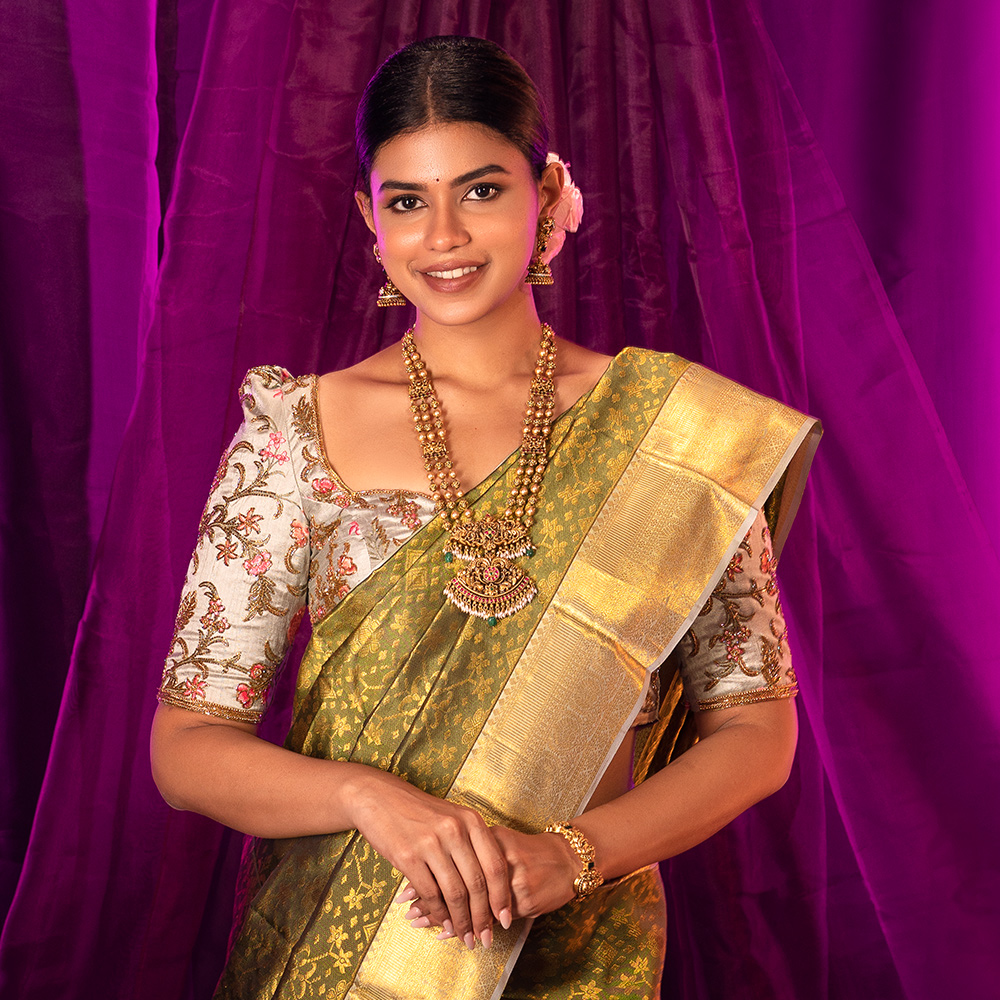
From statement bridal sets to elegant chokers, necklaces remain among the most popular forms of Kundan jewellery. This Kundan and Polki Necklace is one such statement piece carefully crafted for your special occasions.
Kundan Earrings
Jhumkas, chandbalis and drop earrings are enduring favourites that showcase the beauty of Kundan craftsmanship.
Kundan Maang Tikkas
A bridal essential, maang tikkas add balance and sophistication to wedding attire.
Kundan Bridal Sets
Bridal sets combine complementary pieces into a coordinated ensemble designed for wedding celebrations.
How to Identify Authentic Kundan Jewellery
When evaluating Kundan jewellery, look beyond the stones themselves.
Signs of authentic craftsmanship include:
- Precise and secure stone settings
- Fine handcrafted detailing
- Quality meenakari work where applicable
- Hallmarked gold and proper documentation
- Trusted jewellers with established expertise
Authentic Kundan jewellery often reveals its quality through refinement, symmetry and finishing rather than sheer size or visual complexity.
Explore Kundan Jewellery at Goutham Jewellers
Since 1978, Goutham Jewellers has helped generations of customers discover jewellery that reflects both personal style and lasting value. Our collections celebrate the craftsmanship, artistry and heritage that continue to make traditional Indian jewellery treasured across generations.
Explore our Polki Jewellery, Antique Jewellery, Wedding Jewellery and Necklace collections for designs inspired by India's rich jewellery traditions. If you're comparing bridal jewellery styles, our guide on Antique Jewellery can help you make a more informed decision.