Table of contents
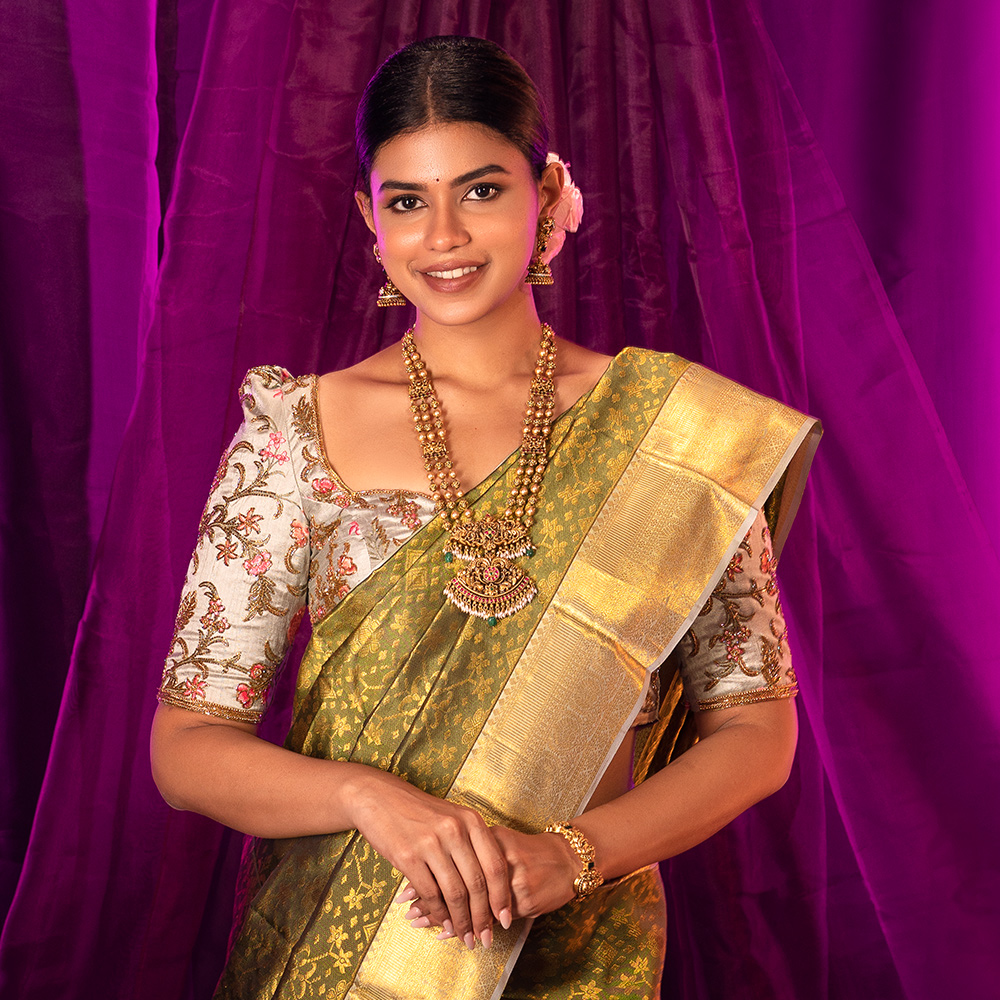
If you've ever looked at a pair of earrings and wondered, "What are these called?", you're not alone. Indian earrings come in many styles, from everyday studs, balis, and hoops to traditional jhumkas, chandbalis, temple jhumkas, kasu drops, and temple ear chains. Some are built for daily wear, others belong to weddings, festivals, and traditions that go back generations. Knowing the right name makes it far easier to search for a design, compare styles, or ask for exactly what you want.
Most customers who walk into our showroom don't ask for an earring by its name. They describe where they saw it.
"The bell-shaped earrings the bride was wearing."
"The moon-shaped gold earrings from my mother's jewellery box."
"The round earrings I saw with a silk saree."
After nearly four decades of helping families choose jewellery, we've found that people remember an earring's shape or the occasion they wore it for far more often than its actual name. That's exactly why we built this guide.
If you're shopping for styling ideas rather than names, our guide to 21 earring styles for women is a better place to start.
Quick Reference: Common Earring Names

How We Help Customers Identify Earrings
One of the first questions we ask isn't "What earrings are you looking for?" It's "Where did you see them?"
An old family photograph, a wedding, a Bharatanatyam performance, a silk saree advertisement, or a screenshot from social media usually tells us more than the name itself. From there, we narrow it down.
Bell-shaped? Usually a jhumka. Crescent-shaped? Most likely a chandbali. Circular and worn every day? Often a bali. Coin motifs with Lakshmi worked into them? You're looking at kasu jewellery.
We've done this for thousands of customers over the years, and once you know what to look for, telling these styles apart gets easy fast.
Everyday Earring Types Found Across India
These are the styles worn everywhere, in every region, by every age group. Most jewellery collections are built around them because they're comfortable, versatile, and easy to wear without a second thought.
Stud earrings
Studs sit flush on the earlobe with nothing hanging below, which makes them the most worn earring in the country, full stop. Gold studs are usually the first piece of jewellery a family buys for a daughter, because they go with anything and never look out of place. Diamond and gemstone studs do the same job with more sparkle. We've noticed something over the years: customers spend more on statement earrings for weddings, but the pair they actually wear the most is almost always a simple stud.
Bali
When someone searches "ring type earrings" online, this is what they mean. A bali is a circular, ring-shaped earring that's been part of Indian jewellery for generations. People ask us constantly whether a bali and a hoop are the same thing but they're not, quite. Balis are smaller, sit closer to the ear, and are built for daily wear. Hoops run larger and lean decorative. A plain pair of gold balis is close to a default purchase for South Indian households, because it covers daily wear, family functions, and festive occasions without needing a second pair.
Hoops
Same circular shape as a bali, scaled up and dressed up. You'll find them minimalist and plain, or textured, twisted, and set with stones. Hoops bridge traditional and Western wardrobes better than almost any other earring type, which is why they've become a favourite for people who want one pair that works with a saree on Friday and jeans on Saturday.
Huggies
Small, tight hoops that sit close against the lobe. The appeal is simple: you get the circular look of a hoop without the size or the weight. We see a lot of younger customers reach for huggies specifically because they layer well with studs or smaller pieces if you have multiple piercings.
Drop earrings
A single decorative element hanging below the lobe, built to stay still rather than swing. Drops sit between a stud and a statement piece, enough presence for an office event or a dinner, without the movement of a dangler.
Danglers
Built to move, not sit still. Longer, often with linked sections that sway as you walk or turn your head. That movement is the entire point, which is why danglers show up most at festivals and evening functions where a little drama is welcome.
Ear cuffs
These wrap around the outer ear and often need no piercing at all. Not a traditional Indian form by any stretch, but we've watched ear cuffs grow steadily with younger buyers who want to mix something contemporary into an otherwise traditional collection.

Traditional Indian Earring Types
These are the styles tied to festive wear, bridal jewellery, and celebrations that have been done a certain way for generations.
Jhumka
If one earring shape is recognised across all of India, it's this one. The bell-shaped dome and hanging body have stayed in fashion for generations, in plain gold for daily wear and in stone-and-pearl detailing for weddings. When a customer describes "bell-shaped earrings," they mean a jhumka almost every time. The occasion usually decides the size: smaller plain-gold jhumkas for festivals and family gatherings, larger temple-motif or stone-set ones for weddings and big celebrations.
Chandbali
The name comes from two words: "chand" for moon, "bali" for ring, and the crescent shape is exactly what it sounds like. Where a jhumka adds length and movement, a chandbali adds width and frames the face. Customers regularly mistake a large chandbali for an oversized jhumka, since both turn up at weddings. The shape settles it every time: crescent moon, chandbali; bell-shaped dome, jhumka.
Kaan phool
Translates to "ear flower," and that's the look. Floral detailing that spreads across the lobe instead of hanging below it. You get the visual weight of a bigger earring while staying compact, which is why kaan phool earrings work well under a dupatta or with hair pulled back at a wedding.
Chandelier earrings
Multiple tiers cascading down from the lobe making it the most elaborate shape in most jewellery cases. These are built for receptions and big events, where the earring is meant to be noticed before the outfit is.

South Indian Specialty Earrings
Jhumkas and chandbalis are known across India. What most jewellery guides skip entirely is the set of earrings that belong specifically to South India. Pieces built on temple craftsmanship, coin motifs, and bridal customs that are still worn here today, not retired to museum cases.

Temple jhumka
A jhumka built around motifs lifted straight from South Indian temple architecture. Lakshmi figures, peacocks, lotus patterns, the same carving language you'd see on a gopuram. These are among the most requested earrings for South Indian weddings, partly because they sit so naturally with a Kanjivaram saree and the rest of a traditional bridal set.
Matilu
Most people recognise a matilu the moment they see one, even if they've never known the name. It's a stud-and-drop construction carrying more presence than a plain stud, lighter than a full jhumka. It has been part of South Indian bridal and festive jewellery for generations. One of the more rewarding parts of this job is when a customer brings in an old family photograph or an inherited piece and asks us to identify it. More often than not, it's a matilu. The name might be forgotten, but the style never really left.
Kasu drops
"Kasu" means coin, and that's the entire design. Small coin-shaped gold discs, frequently stamped with Lakshmi, strung together into a drop. Customers almost never ask us for "coin earrings." They ask for kasu jewellery by name, because the motif has become inseparable from South Indian temple tradition. You'll find these in our antique jewellery collection alongside other coin and temple-motif pieces.
Temple ear chains
Also called maatal in some households, these connect the earring to the hair with a decorative chain, pulled back and pinned. You'll see them in Bharatanatyam costumes and full South Indian bridal sets, and there's a practical reason beyond tradition: the chain helps carry the weight of a heavier earring through a long ceremony or performance, so the earlobe isn't doing all the work alone.
Antique finish temple earrings
Not a separate shape, but a finish. These earrings are gold treated to look aged, matte, slightly darkened, paired with temple-style stonework instead of bright polish or CZ. This is the version customers reach for when they want a traditional look that doesn't read as new.
These five aren't a footnote to the rest of the guide. They're the styles connected directly to what's actually worn in Tamil Nadu households today, and they're the reason a guide written from Chennai can say things a Jaipur- or Hyderabad-based jewellery blog simply can't.

Gemstone and Heritage Earrings
Navratna
Nine gemstones (diamond, pearl, ruby, blue sapphire, emerald, yellow sapphire, coral, cat's eye, and hessonite) are set together according to Vedic astrology, with each stone tied to one of the nine planets. Customers who ask for navratna by name are rarely shopping decoratively. It's usually a deliberate choice, often on an astrologer's advice, and the nine-stone arrangement is non-negotiable.

Ruby earrings
Rich red against yellow gold, and the gemstone most often requested to match an existing necklace or bangle set rather than bought as a standalone piece. Customers building around inherited jewellery tend to reach for ruby first.
Emerald earrings
The green reads as regal rather than casual, and it's the stone we see paired most with green silk sarees and bridal sets that already lean traditional. Less of an everyday choice, more of an occasion choice.
Sapphire earrings
Quieter than ruby or emerald, and chosen by customers who want a gemstone without it dominating the outfit. Sapphire studs and small drops do well with formal and office wear, where understatement is the point.
Diamond studs
The most flexible purchase in this entire guide is the diamond stud. Daily wear, office, gifting; all can be covered by the same pair. Our lab-grown diamond jewellery collection carries diamond studs at a range of price points if you'd rather not compromise on size.

How to Choose the Right Earring Type
The first question we ask anyone undecided isn't about style. It's about occasion.
For daily wear, most people land on studs, balis, huggies, or small hoops that are comfortable enough to forget you're wearing them.
For festivals and family functions, jhumkas, chandbalis, danglers, and kasu drops do the job without going overboard.
For weddings, temple jhumkas, matilu, full chandbali sets, and chandelier earrings remain the pieces people reach for generation after generation.
Starting with the occasion narrows things down faster than scrolling through every style at once. If you already own a set you're trying to match, or you've inherited a piece and want something to go with it, that's worth mentioning too; it's often the detail that actually decides which style fits, more than the event itself.
Final Thoughts
We've met countless customers who arrived with nothing more than a wedding photo, an old family portrait, or a screenshot on their phone with no name for what they wanted, just a clear picture of how it looked and where they'd seen it. That's normal. Most people shop this way.
Once you can tell a bali from a hoop, a jhumka from a chandbali, or a temple earring from a modern one, the rest of the decision gets a lot easier. And if you're still not sure what to call the piece you have in mind, that's exactly the kind of question our team is used to working through. Describe it, show us a photo, or bring in the piece you're trying to match, and we'll take it from there.
Browse our complete women's jewellery collection to see these styles in person.